
Feature
By: Edward W. Sites, Ph.D., Professor Emeritus
Wouldn’t you like to know what it was like to attend the School of Social work during the depression, during World War II, or during the great civil rights movement days of the 1960s and 1970s? How did World War II affect the student body and curriculum? Who were some of the favorite professors and what were their classes like? What were field placements like? Wouldn’t you like to talk to some of the students from those days?
Well, it just so happens that a treasure trove of tape recordings of students from those eras has just surfaced. These recordings were collect by a former Director of Development, Vincent Day. Vince went around the country visiting former graduates and tape-recording interviews with them about their experiences and their careers. Some of them became quite well known such as Gisela Konopka (MSW ‘43), Elaine Brody (MSW ‘44), Clare Lustman (MSW ‘41), and Ruby Pernell (MSW ‘44).
Unfortunately, because of privacy laws, these wonderful resources will not be available publicly online for those interested in digging into the informative and intriguing interviews further. However, they are available to those visiting the University Archives in person at 7500 Thomas Boulevard, Pittsburgh. You may listen to the tapes and read the transcripts of the tapes that have been transcribed.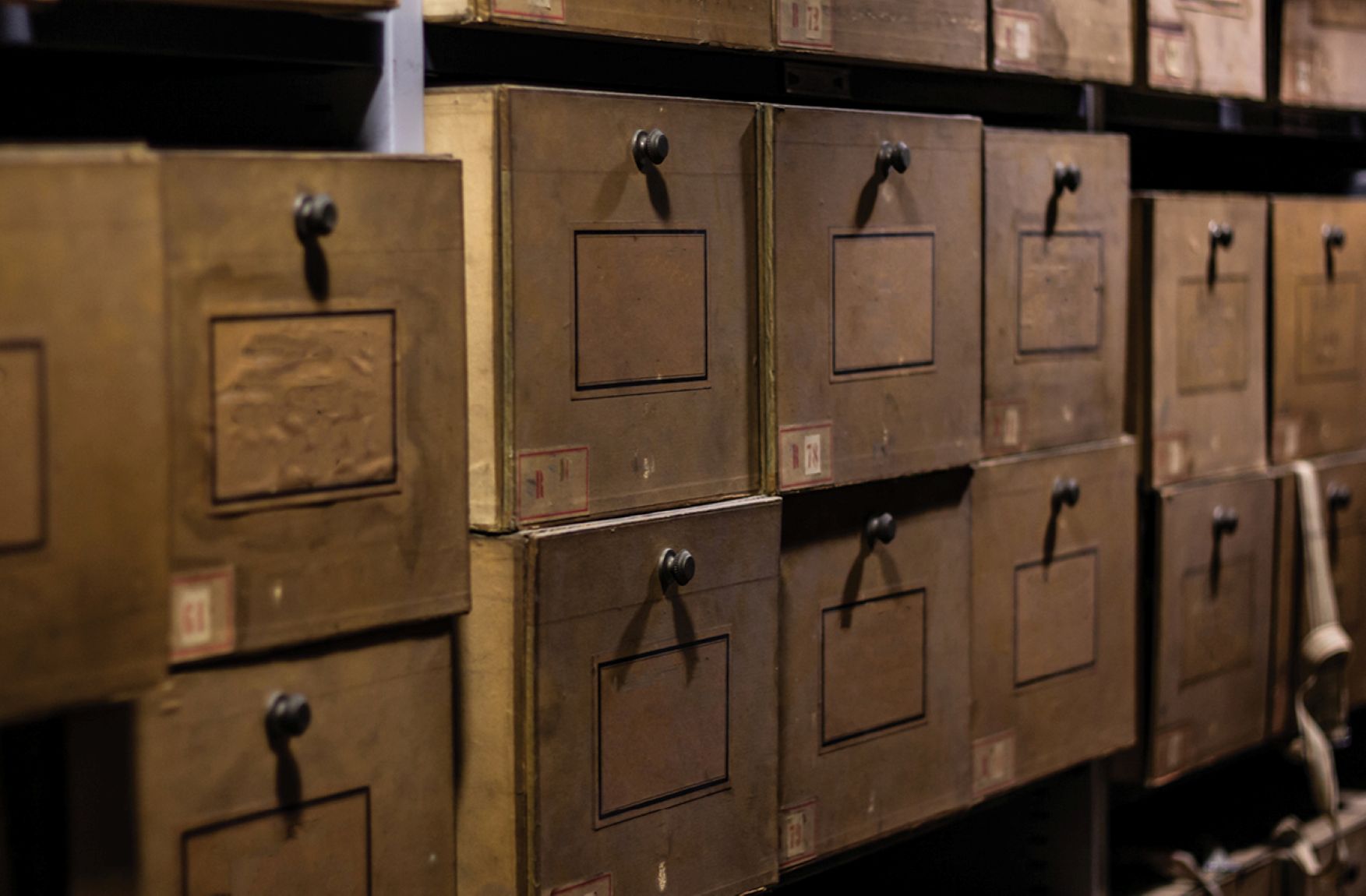
In all likelihood, the teasers above have aroused your curiosity. To help satisfy that in the limited space available some of the more interesting observations from the interview with Irwin H. Gold (1919-2001), MS in Social Administration, ‘43 will be summarized.
Gold was from Cleveland but passed over Western Reserve University (now Case Western Reserve) because of Pitt’s national reputation and because his brother, Bertram, was a Pitt School of Applied Social Sciences faculty member in group work. Gold expounds at some length about the national figures on the faculty at the time and the school’s prominence in all three major study areas – casework group work and community organization. The dean at the time was Wilbur I. Newstetter, also a prominent national figure, especially in the fields of group work and community organization. Gold mentions particularly, faculty members Gertrude Wilson and Gladys Ryland and their national standard textbook Social Group Work Practice. He also speaks of his fellow students who became well known national figures such as Gisela Konopka, Paul Simon, Bernie Shiffman and others. He spoke of how World War II affected the School. The classes were smaller; the students were older; and there were many women students “because men weren’t available.” Gold’s wife, Beverly, graduated four years after he did.
Perhaps the most compelling narrative is of the interview is Gold’s vivid description of the racial problems and racial segregation in Pittsburgh at the time. He says, “We had only a few black students who had a terrible time in Pittsburgh, … but they were outstanding people, and we felt for them. There was only one good restaurant in Oakland … and no blacks were admitted. We went together to force the issue. This was in 1941. … In 1942 we forced it again. They wouldn’t serve. The waitress would come over to some of us [and say] ‘I had to tell you this, but we can’t serve you, you know why, we are restricted to whites,’ and it wasn’t against the law. We said, ‘We won’t move, you are going to have to serve us. They wouldn’t serve us [so] we picketed the place.” Gold remarks, “This was social action … and it was another way of unifying us.” This was virtually 2 full decades before the February to July 1960 Woolworth lunch counter sit-ins by black students in Greensboro, NC which has attracted so much attention.
As you can imagine, these tapes are very exciting for scholars, researchers and curious alums. I write this article to share some of this history and to remind you of our Pitt Social Work Archive. I also ask that you consider writing an autobiographical description of your School experience, your classmates, your faculty, your field placements, the current events taking place then and how they influenced your experience, and the like? Let’s add more of these stories to our collection. You could become part of the Schools Archives and history. A recorded interview might even be arranged. The School will also be reaching out to some of you in the future. If so, we hope you will respond favorably.