
Feature
In January 2025, Pitt Social Work welcomed Dr. Suzanne Pritzker as the new Associate Dean for Academic Affairs. She has also been serving as Acting Director of Practicum Education this past year. We got the chance to ask Suzanne about her background and how she ended up joining the Pitt community.
How did you get to where you are—what was your path to Pitt? Did you know it would always be social work?
I grew up outside of Washington, D.C. where you can't help but think about political engagement. My father worked for the federal government, so from an early age I was interested in policy, how we could shift policy, and what it looked like to think about policy from a more social justice-oriented lens.
While doing policy work in Virginia after undergrad, I noticed a disconnect between who was making policy and the experiences of the people that policy was being made to impact. The more I was present for these conversations, the more it frustrated me.
I discussed this disconnect at lunch with a coworker, who happened to be social worker doing policy work. He asked if I had considered going into social work and recommended that I speak to one of his professors. The conversation with this policy professor opened my eyes--I didn't know people were having these conversations. Thinking about how we connect people's lived experiences and bring them to the policy world, and how we bridge that? Suddenly it hit me-- there's this field that does this!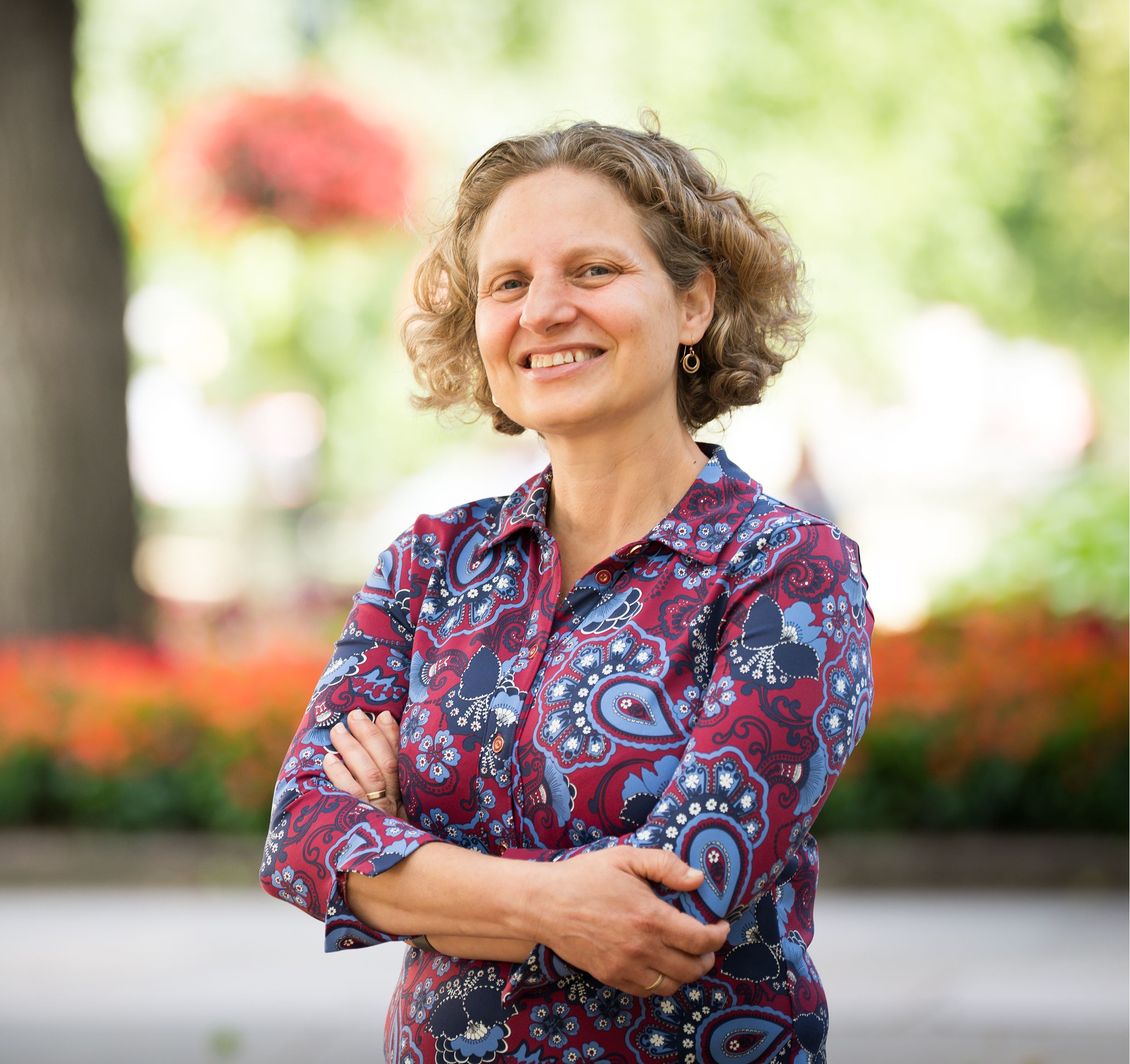
As I spent more time in social work, what I realized is, there's a whole space, not only social work, but this concept of civic engagement. How do we think about people being engaged in speaking up, being part of the decision-making in their lives around them.
I began my faculty career at University of Houston, where I devoted a lot of my focus to expanding social work students’ understanding of and sense of self as political actors. I ran a legislative internship program there. During that time, I also co-authored the first textbook, on political social work.
If I was going to ever leave the University of Houston, where I’d built this space and infrastructure around political social work, it would have to be for a place that really took macro social work seriously. My work is grounded in people's voices in community, so the place had to take community engagement seriously and be thoughtful about issues connected to whose voices are not heard, and driven to want to change that.
When considering what schools held space for this commitment, Pitt was number one on my list at every turn. At Pitt, there was an opportunity to continue some of the work that I had been doing around leadership in social work education and to continue the deep national legacy of macro social. It was the perfect combination.
For social workers interested in impacting policy (just beginning to get involved in the political sphere), what suggestions do you have for them?
What we need is to think about where, from our position, we can contribute. So, if you're in direct practice, and you are working in services for those who are unhoused, and you see the same issues coming up repeatedly. How do you take those issues and say, we see what solution is needed. We know what kind of policy change is needed. We know what folks need.
For example, during COVID I had a student, and she was working with clients who often received service X, but in order to receive the service, they had to complete form Y, but they couldn't get form Y because it was during COVID and the office was closed.
This student brought this issue to agency leadership, and then leadership took it to the agency board, and then the agency board advocated for changes, and she gave them the information. She said, "This is what we're seeing in practice. This is the issue. If we could get around this, this is what we need.” She was putting that together from experience, but it was getting it in the hands of the board. Getting it to those situated in a way that they could make the case.
I think we sometimes see it as if I'm not doing all of it, I'm doing none of it, as opposed to; how do we each bring what we can, in the spaces that we can? We are in a time where we can feel that if I'm not at the front lines of the protest, then I'm doing nothing. But I think if we come back to what do we do in our practice, identify our expertise, and engage with our clients and the communities we’re in, we can figure out some paths forward. And then we can ask how we can amplify these ways forward.
How do you foresee engaging with alumni, and what role do they play in your vision for Pitt Social Work?
I see opportunities to grow what has been happening and has existed at Pitt, but I also want to recognize the school’s long legacy of macro-oriented work and being a leader in that. What can I bring along with others who are here to help advance that legacy?
We have a strong macro legacy, but we have room to grow the policy change piece of things, the political piece of things. I want to compliment the legacy, but also strengthen the navigating political systems lens in our work. There is such strength to build from connecting with alums in policy/political spaces to learn what their experiences were.
I was very proud to grow the legislative internship program during my time at Houston, It was a small and focused program that mentored about 100 students over my time. That was truly such a serious training ground where those students, because they had this intensive political training experience, some of them are now in major policy positions in the federal government. Some of them are chiefs of staff in legislative offices in Texas. Some have run for office, one of them is Chief of Staff in a D.C. office. We can't replicate that in a classroom. It was a hands-on, immersive experience, and I would love to figure out what a Pennsylvania version of that would look like. How can we make sure that our students have a program with serious political training. What is the alumni angle here? Alumni who are engaged in these areas, please step forward? Alumni can play a huge role in creating such an experience—by sharing their journeys to hosting our students.
Given your experience, can you speak about the ways you have seen social workers grow and expand in the policy sphere and in political influence?
A lot of times in social work when we talk about advocacy, it is from the outside, and that's important. But there's also an importance for being in positions where you are making policy decisions, where you're at the table and trying to influence what the people at the table are doing. In those situations, we should not shy away from calling ourselves social workers. I hear and have even seen people who have, introduced themselves as, “I was a social worker, and now I do this work.”
It is social work to be part of policy decision-making. That is not a non-traditional path. We are bringing our core values, our core skills into the policy arena, and so our presence in policymaking is important to state and note.
What does it look like to make sure people in our communities are fed? What does it look like to make sure that we are a place that can once again, in the future, be welcoming to immigrants? These are critical conversations and I'd rather see us at those tables, informing the discussion, than only having us be on the outside. Part of what I will bring to the school is asking how we can help develop and support social workers to have the skills to be part of those conversations, policy-making, policy influence, and all of that in the future.
What does a day outside the office look like for you?
My perfect day… A nice breakfast and coffee with my kids and my husband. Then we would go for a hike in the mountains. I'm really enjoying having all the seasons. I have not had them in a long time. We would just spend the day hiking, have a picnic near some running water somewhere. I'm simple. I just want to be outside in nature with my family and not in a rush. Nowhere to be, except outside.